
Buddha attained supreme enlightenment through meditation and then spent His whole life converting sentient beings. The Four Foundations of Mindfulness Sutra teaches a method of meditation to gain no-self, and to enter Nirvana.
From Loneliness to Inner Connection: What Can a Meditation Retreat Offer?
In the digital age, despite having countless ways to connect with others, people increasingly feel isolated and disconnected. Loneliness creeps into everyday life, appearing even in the midst of bustling crowds. Many people, including international visitors to Vietnam, carry with them exhaustion from life’s pressures, emotional wounds, and an emptiness that is difficult to fill.
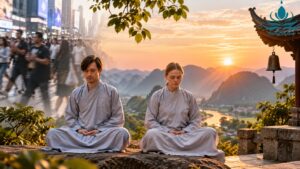
They turn to meditation and mindfulness meditation retreats as natural ways to heal, yet they still wonder: Can sitting alone in a quiet space make loneliness even more intense? How can a meditation retreat truly help us overcome this pain?
From the perspective of Buddhist wisdom, particularly through Buddhist teachings and meditation practices, authentic meditation helps us heal loneliness at its roots. Meditation does not encourage us to escape from life. Instead, it helps us develop the inner strength to face ourselves, transform the ego, open our hearts, and connect more deeply with others.
1. How Does a Meditation Retreat Transform Loneliness? Four Layers of Deep Healing
When you attend a mindfulness meditation retreat that follows the authentic Dharma, your mind is not left alone in an uncertain void. Instead, you are guided through a systematic, disciplined, and thorough process of transformation.
1.1. Breaking the Cycle of “Inner Monologue” — Quieting the Mental Noise in the Brain
Modern neuroscience has demonstrated that when people are alone with nothing to do, the brain’s Default Mode Network (DMN) becomes highly active. The mind then falls into the dangerous trap of incessant inner monologues:
- The brain keeps muttering endless, disconnected stories to itself.
- It revisits painful memories and past failures, using them as reasons for self-reproach.
- It compares itself with other people’s successes and nurtures self-pity.
These restless, illusory mental noises turn silence into a form of terrible psychological torment.
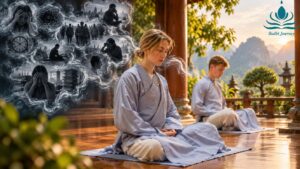
During a meditation retreat:
- You are guided in an original meditation technique: bringing your entire attention back to your body and gently observing each natural inhalation and exhalation, without interfering with or controlling the breath.
- At the same time, you deeply experience the stillness, relaxation, and complete release of tension throughout your body, from the crown of your head to the soles of your feet, paying particular attention to the lower abdomen.
- As your awareness remains focused on the breath and clearly perceives the whole body, the muttering in your mind gradually diminishes and eventually falls silent. The inner noise subsides, restoring a space of clarity, openness, stillness, and peace. At that moment, you realize that silence itself was never frightening; it was the restless stream of thoughts that caused anxiety and exhaustion.
1.2. Eroding the Ego Through Humility and Mindfulness of Impermanence
Authentic meditation practice never cultivates spiritual pride. Instead, it always begins with humility, reverence for the Buddha, and the recognition that we are as small as a grain of sand, while learning to love countless living beings.
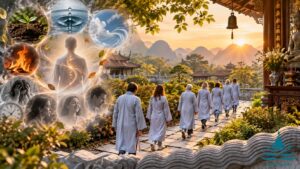
- In the pure environment of a Buddhist monastery, practitioners learn to observe their bodies and streams of consciousness deeply. They see clearly that the physical body is formed through the coming together of the four great elements: earth, water, wind, and fire. When an exhaled breath does not return, life comes to an end. They also recognize that every emotion—happiness, sadness, loneliness, and anger—arises and then passes away on its own, without any eternal, unchanging “self” residing within it.
- As wisdom regarding impermanence and non-self begins to illuminate the mind, the rigid shell of the ego gradually wears away. The expectation that “life must treat me well” naturally falls away. We become less sensitive to other people’s glances, praise, or criticism, and no longer regard ourselves as so important that we must suffer over others’ indifference. As the burden of the ego diminishes, loneliness immediately loses its foothold and gradually subsides.
1.3. Awakening Inner Peace — Ending Emotional Dependence
Modern people often seek happiness through external stimulation: late-night entertainment, impulsive shopping trips, fleeting relationships, or each new “like” on social media. This is merely borrowed happiness, filled with insecurity. When the excitement fades, disappointment and emptiness return with even greater intensity.
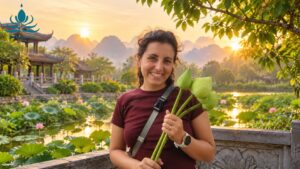
Meditation opens the door to an entirely new dimension of happiness: the peace that arises from a purified mind.
- When the body becomes completely still, the spine remains upright, the breath grows as gentle as silk, and the mind gradually becomes clearer, a refreshing, warm, and joyful energy naturally begins to emerge and permeate every cell.
- This is inner happiness—independent and free from reliance on any person or material condition. Once you have experienced this profound peace, you will realize that being alone is a priceless opportunity to restore your vitality and commune with the spiritual depths of your own being, rather than a frightening sentence of isolation.
1.4. Expanding Loving-Kindness — The Body May Be Alone, but the Heart Embraces All Beings
The outstanding essence of meditation retreats based on the Buddha’s teachings is that meditation is always accompanied by the contemplation of loving-kindness.
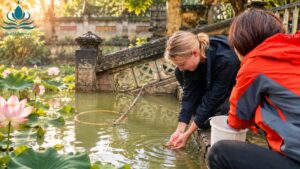
- Practitioners are guided to expand the capacity of their hearts, sincerely wishing safety, peace, and liberation for their parents, teachers, friends, and even strangers they have never met; for the poor and sick in society; and for all sentient beings and plants throughout the ten directions.
- When we open our hearts to embrace the entire universe and all living things, the pure vibration of love fills the space around us. A person whose heart is filled with sincere love for all beings, who feels the suffering of humanity and rejoices in the happiness of others, remains spiritually connected to all of life, whether deep in a forest or alone in an empty room. Such a person will never again truly feel lonely.
2. The Buddhist Law of Cause and Effect in a Meditation Retreat: “Sowing Seeds of Gratitude and Kindness” to Warm the Heart
One major misconception among people learning meditation is the belief that simply retreating to a corner, closing their eyes, and sitting in meditation will eliminate loneliness and bring peace.
The Law of Cause and Effect operates with great precision and impartiality: “Betraying kindness is the cause; loneliness is the result.”

If, in the past or in our daily lives, we have been indifferent to other people’s suffering, failed to honor the kindness of our parents and teachers, or focused solely on serving our own interests, that cold energy will attract the karmic consequence of loneliness and isolation. Without the blessings of virtue, even if someone spends countless hours sitting on a meditation cushion, their inner world may remain restless, barren, and dark.
For this reason, a complete meditation retreat at a monastery involves more than hours of seated meditation. It also deeply incorporates the practice of “sowing seeds of gratitude and kindness in everyday life.”
- Performing service with humility: Practitioners join the monks and nuns in ordinary daily tasks, such as sweeping the temple courtyard, removing weeds from the medicinal garden, setting the dining tables, and washing dishes in mindful silence. Using our energy to serve others, beautify the temple grounds, and make others more comfortable is one of the most effective ways to wear down the ego.
- Practicing appreciative joy: Throughout the retreat, when we see a fellow practitioner meditating peacefully, someone enjoying good health, or another person with a joyful expression, we learn to feel genuinely happy for them. This practice of appreciative joy extinguishes the roots of narrow-minded envy, a poison that feeds distance and separation between people.

- Practicing kind speech and noble silence: We avoid divisive words, criticism, and pointless arguments. Instead, we speak with kindness and in ways that build others up, while cherishing periods of quiet contemplation to guard our speech and its karmic consequences.
When the day comes to an end, and we have devoted ourselves wholeheartedly to others, sowing warm and wholesome seeds of merit, we can sit cross-legged on our meditation cushion at night as the light of virtue and the power of concentration merge. In that moment, silence becomes the most peaceful refuge, warming the entirety of our hearts.
3. Unique Real-Life Experiences at Vietnamese Buddhist Mindfulness Meditation Retreats
3.1. Practicing at Sacred Buddhist Sites
The retreat takes practitioners away from the noise of urban life and immerses them in the peaceful surroundings of some of Vietnam’s most renowned ancient temples and sacred sites.
- Phat Quang Pagoda (Dinh Mountain, Ba Ria–Vung Tau): Hidden in a valley surrounded by extensive bamboo forests, with streams flowing gently throughout the year, this is a place for cultivating authentic meditation, practicing the six principles of harmony, developing humility, and serving humanity.
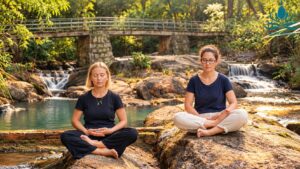
- Sacred Yen Tu Mountain (Quang Ninh): The birthplace of the Truc Lam Zen tradition, founded by Emperor-Buddha Tran Nhan Tong. Its mountain peaks and drifting clouds inspire steadfast determination and the noble spirit of engaging with the world through service.
- The Bai Dinh–Trang An Complex (Ninh Binh): A harmonious combination of magnificent natural landscapes recognized by UNESCO as a World Heritage Site and the solemn beauty of Buddhist sacred grounds.
- Tam Chuc Pagoda and Dia Tang Phi Lai Pagoda (Ha Nam): Their tranquil and elegant surroundings allow every step of walking meditation to feel lighter, helping practitioners leave behind the dust and distractions of worldly life.
- Small, peaceful pagodas nestled in the bustling capital: Places you can visit even during a busy trip to Hanoi.
3.2. A Balanced Daily Routine to Purify Body and Mind
Each day of the retreat consists of a harmonious series of experiences, thoughtfully designed to restore physical and mental well-being.
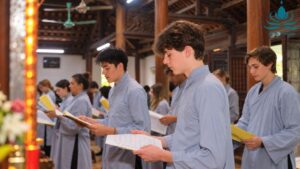
- Daily Buddha worship and chanting: You will participate in ceremonies honoring the Buddha, expressing gratitude to the enlightened one who is free from ego, offering sincere prayers for well-being, and chanting profound scriptures imbued with philosophical wisdom and loving-kindness. These practices help sow seeds of compassion in your heart.
- Meditation at dawn and in the quiet of night: Practice sitting in the full lotus posture with an upright, stable spine, relaxing the entire body, and deeply observing the natural breath.
- Qigong and mindful movement: Traditional wellness and meridian-based Qigong exercises help improve the circulation of energy and blood, strengthen muscles and bones, and release areas of energy stagnation caused by sitting at an office desk for long hours. They support physical health and inner strength, benefiting both daily life and meditation practice.
- Walking meditation in nature — Peace in Every Step: Each slow, mindful step touches the earth as you listen to birdsong and the whisper of the wind, bringing the mind fully back to the present moment, here and now.
- Mindful vegetarian dining: Enjoy fresh, wholesome plant-based meals prepared from local agricultural produce. Practice eating in silence and cultivating deep gratitude toward nature, farmers, and the people who prepare the food.
- Tea conversations and Buddhist Dharma discussions: In a warm, open setting over a cup of tea, instructors help you explore Buddhist teachings and the impartial Law of Cause and Effect. You can share your concerns and work through inner struggles and emotional burdens in the light of karma and the authentic Dharma.
3.3. Connecting with a Global Sangha (Spiritual Community)
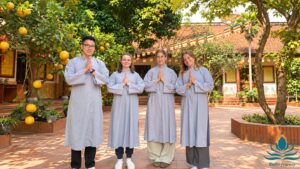
One of the most moving experiences of meditation retreats in Vietnam is the way they dissolve boundaries of nationality, language, and skin color. You will sit in meditation alongside fellow practitioners from around the world—people who are also courageously facing their own pain and striving toward the light.

Wordless empathy, gentle smiles, and warm, compassionate eyes within the Sangha will show you that, on the path to enlightenment, you have never been alone.
4. Specially Designed Meditation Retreat Journeys
Depending on your available time and practice needs, you can choose from professionally organized programs.
4.1. Half-Day and One-Day Retreats
- Designed for travelers with short business trips or brief holidays in Hanoi or Ho Chi Minh City.
- Introductory experiences covering basic meditation posture, breath awareness, relaxation meditation, and mindful tea drinking.
4.2. Immersive Journeys of 2 to 4 Days
- Featured programs include Path of Stillness, Peace in Every Step, The Power of Mind, and Healing Silence, held in Ninh Binh, Yen Tu, and Tam Chuc.
- Suitable for a digital detox, deep stress relief, and restoring emotional balance.
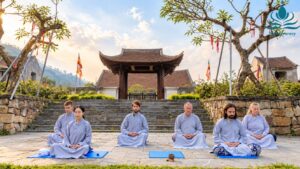
4.3. Seven- to Eight-Day (or more) Monastic Life and Temple Accommodation
- Stay directly at a monastery and experience life much like a monastic practitioner: waking up at 4 a.m., meditating, chanting scriptures, performing daily service, eating vegetarian meals, and observing precepts in a peaceful environment.

- This is a profound journey of inner renewal, intended to help you release emotional burdens and establish a stable, peaceful way of life when you return to everyday society.
Conclusion: Returning to Yourself to Love More Deeply
A Buddhist mindfulness meditation retreat does not isolate you from the world or encourage you to escape reality. Instead, it serves as a bridge that guides you from loneliness toward a deeper connection with your inner self.
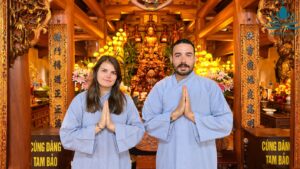
When your mind becomes peaceful and serves as a refuge amid life’s storms, you can return to society with a new perspective: no longer clinging to others or expecting them to fill your inner emptiness, but instead living with greater understanding, compassion, humility, and love, ready to share with others and contribute to the world.
Welcome to Buddhist Mindfulness Meditation Retreats in Vietnam—a place where you can begin your journey of inner transformation amid magnificent natural landscapes and a thousand-year-old cultural heritage.
Related articles

When You Never Stop, What Are You Running Away From?
Take a moment to look back at your daily routine: How long has it been since you truly...
See more
Are You Living So Fast That You Can No Longer Hear Yourself?
Every morning when you wake up, what is the first thing you do? Do you immediately pick up...
See more
Can Meditation Help Us Feel Less Lonely?
In today’s constantly connected society, people have countless ways to communicate, yet they still feel lonely and isolated,...
See more
Can You Learn to Be Alone Without Feeling Lonely?
In an age of explosive social media growth and the fast-paced rhythm of urban life, human beings seem...
See more
