
Buddha attained supreme enlightenment through meditation and then spent His whole life converting sentient beings. The Four Foundations of Mindfulness Sutra teaches a method of meditation to gain no-self, and to enter Nirvana.
3 Distinctive Characteristics of Mindfulness Meditation Retreats in Vietnam
Mindfulness meditation retreats in Vietnam have grown rapidly in recent years and developed distinctive characteristics, blending traditional Buddhist spirit with adaptation to modern life. Below are the most notable features of mindfulness meditation retreats!
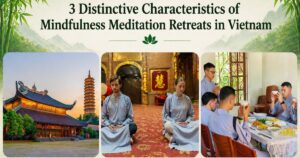
1. Why choose Vietnam for mindfulness meditation retreats in Vietnam?
Vietnam’s appeal as a meditation destination for mindfulness meditation retreats in Vietnam comes from several unique factors:
- Profound Buddhist heritage: Buddhism has been a cornerstone of Vietnamese culture for centuries, fostering deep respect for spiritual practices and creating a widespread network of pagodas and monasteries. This provides an authentic and supportive environment for mindfulness meditation retreats in Vietnam.

- Serene natural landscapes: From the misty mountains of Da Lat and Sapa to the tranquil beaches of Phu Quoc and the lush Mekong Delta, Vietnam offers diverse settings that are ideal for stillness and reflection in mindfulness meditation retreats.
- Affordability: Compared to similar retreats in Western countries, meditation retreats in Vietnam are generally very reasonably priced, offering great value and making spiritual development more accessible.
- Warm hospitality: Vietnamese people are known for their kindness and hospitality, creating a friendly and supportive atmosphere that enriches the experience of mindfulness meditation retreats.
- Holistic wellness: Many retreats integrate meditation with other wellness practices such as qigong for health improvement, healthy vegetarian cuisine, and traditional therapies, helping to enhance overall well-being.
2. What to Expect from Mindfulness Meditation Retreats in Vietnam
When searching for “mindfulness meditation retreats in Vietnam,” you are likely looking for specific information to help you make a decision and choose a transformative experience. Below are the key aspects commonly of interest:
- Types of retreats: Mindfulness meditation retreats in Vietnam range from intensive programs focused on meditation practice, spiritual rituals, studying Buddhist teachings and the law of cause and effect for daily application, and silent self-observation, to programs combined with vegetarian cooking classes and traditional Eastern medicine therapies—offering a wide variety of choices.

- Locations: These retreats are often held in peaceful temples situated in quiet areas, from urban noise, surrounded by beautiful and tranquil natural landscapes.
- Programs & schedules: You will experience a structured daily routine, including meditation sessions, Dharma talks, mealtimes, and dedicated periods for personal reflection.
- Accommodation & amenities: Living conditions are typically simple, often within temple settings, allowing participants to experience a serene, minimalist monastic lifestyle filled with a sense of care and compassion.
- Cost & inclusions: The cost of a retreat package depends on the duration of your stay and the chosen location, usually covering accommodation, meals, teachings, materials, and related services.
- Suitability for beginners vs. experienced practitioners: Mindfulness meditation retreats in Vietnam are designed for both beginners and experienced meditators alike.
3. Popular Destinations for Mindfulness Meditation Retreats in Vietnam
- Hanoi: In Hanoi, mindfulness meditation retreats in Vietnam are often held at ancient pagodas within the bustling capital, such as Linh Thong pagoda, which offers short-term retreats. These sacred spaces in the heart of the city allow participants to step away from the fast-paced urban lifestyle and return to inner stillness. Retreats here are usually short and suitable for busy individuals, focusing on applying mindfulness in daily life. Longer retreats may take place at Đong Quang pagoda, a peaceful countryside pagoda that offers rich local cultural experiences.
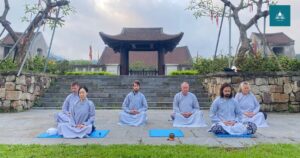
- Ho Chi Minh City: In Ho Chi Minh City, mindfulness meditation retreats are diverse and attract many young people. Notable locations such as Buu Lam pagoda frequently host short-term retreats. The dynamic nature of this city is reflected in teaching styles that are practical and relatable to modern life pressures, helping participants balance work and spiritual well-being while applying Buddhist teachings to transform their lives.
- Vung Tau: Vung Tau is an ideal destination for longer mindfulness meditation retreats that combine practice with real-life monastic experiences. Thien Ton Phat Quang is a prominent retreat site nestled in the mountains, offering fresh air and a tranquil environment. Participants not only practice meditation but also immerse themselves in nature, allowing for deep relaxation and energy renewal.
- Ninh Binh: Retreats in Ninh Binh are closely connected with majestic natural landscapes such as Chùa Bái Đính and the Tràng An Landscape Complex. The limestone mountains and serene waterways create an ideal setting for deep meditation. Retreats here are often immersive and longer in duration, helping participants reconnect with nature and restore inner balance.
- Ha Nam: Ha Nam is home to Chùa Tam Chúc, one of the largest Buddhist complexes in Vietnam. Mindfulness retreats here are typically long-term, held in a spacious and solemn environment. The combination of lakes, mountains, and grand architecture provides an excellent setting for meditation and spiritual practice.
- Quang Ninh: This province is deeply associated with the Truc Lam Zen tradition, especially at the Yen Tu historical site, where Tran Nhan Tong founded the Truc Lam Zen school. Retreats in Yen Tu often combine mountain trekking with meditation, allowing participants to cultivate both physical and mental strength while exploring the roots of Vietnamese Buddhism.
These destinations each offer unique characteristics—from convenient urban settings to majestic natural environments, and from short-term retreats to intensive long-term programs. Together, they create a rich diversity of mindfulness meditation retreats in Vietnam, catering to a wide range of needs.
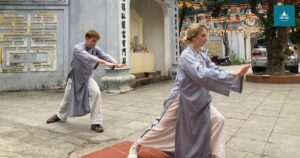
Mindfulness meditation retreats in Vietnam are increasingly becoming an important spiritual support in modern life. They not only help individuals rediscover inner peace but also nurture a more mindful, positive, and compassionate way of living through Buddhist teachings and the benefits of meditation. In today’s fast-paced and stressful world, these retreats offer a meaningful journey to reconnect with oneself, gain deeper self-understanding, and live more fully in each moment.
Related articles
Top must visit with low budget in Hanoi and Ho Chi Minh City
Vietnam is rapidly becoming one of the world’s leading destinations for mindful travel, offering meaningful experiences that go...
See more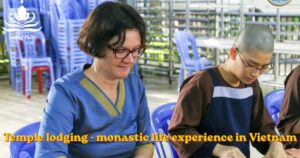
Temple lodging – monastic life experience in Vietnam
Amid the pressure and fast pace of modern life, more and more people are seeking peaceful places to...
See more
Buddhism in Vietnam
Buddhism in Vietnam is one of the most influential religions in the country, shaping not only beliefs but...
See more
5 most remarkable highlights of the best meditation retreat near Hanoi
To evaluate the best meditation retreat near Hanoi, you should not only consider the location, but also the...
See more
